
Quote for F5 Appliance
When an F5 BIG-IP appliance reaches End of Life, buyers often face a difficult timeline: keep an aging unit running, source spare hardware, or refresh to a newer rSeries platform before a maintenance, audit, or capacity deadline.
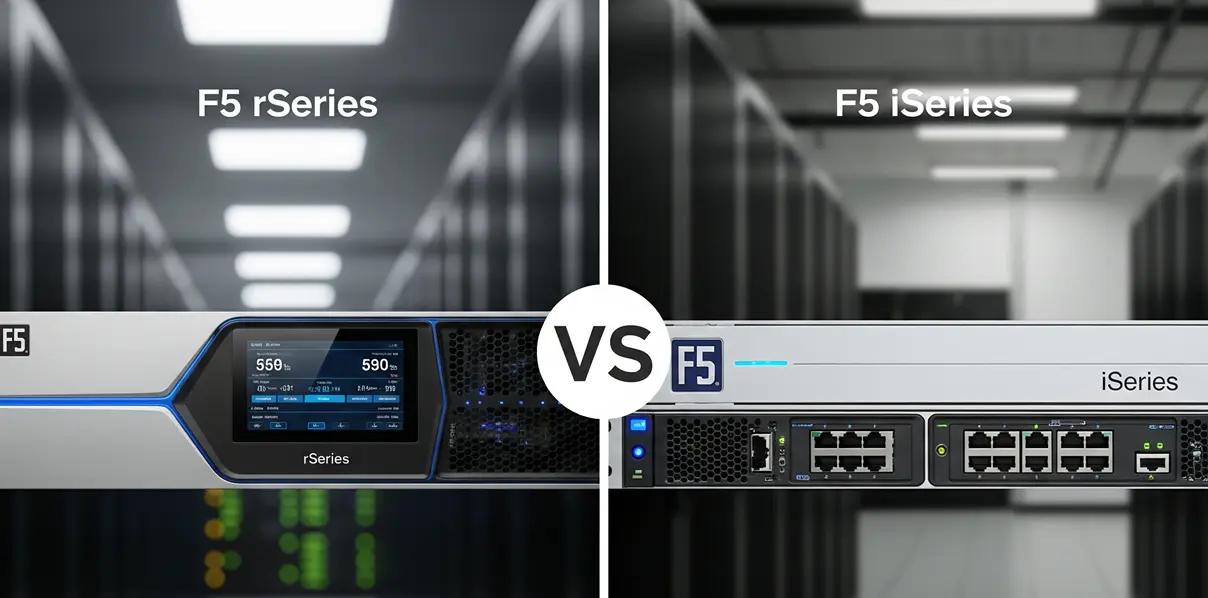
This guide is written for infrastructure, procurement, and security teams that need practical sourcing support for F5 BIG-IP EOL replacement planning. It focuses on the hardware buying workflow: what to confirm, what to ask for in a quote, how to compare iSeries and rSeries options, and how to avoid assuming that any replacement is automatically equivalent. For a deeper migration view, pair this article with the F5 rSeries vs iSeries guide.
F5edge.com provides independent hardware sourcing support for teams evaluating replacement BIG-IP appliances, including rSeries hardware options for LTM, Advanced WAF, Link Controller, and related BIG-IP deployments. Availability, pricing, licensing, support eligibility, configuration compatibility, export review, and delivery timelines must be verified before purchase.
First Steps for BIG-IP EOL Replacement
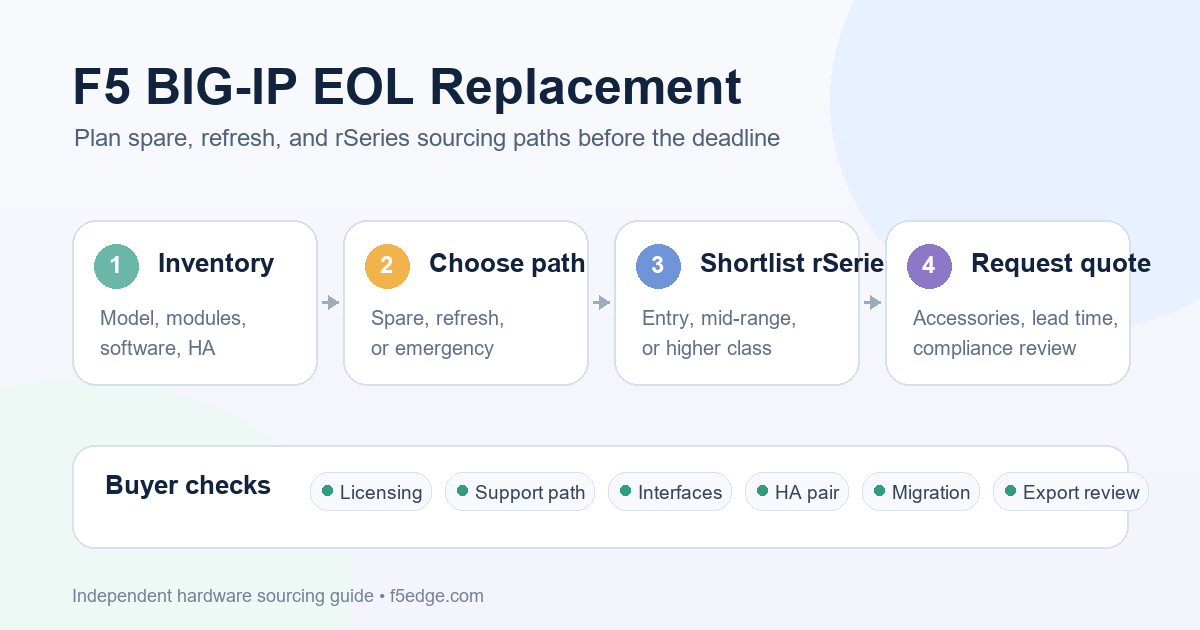
Start by documenting the current BIG-IP environment before requesting quotes. A replacement decision should not be based only on the old model name.
Collect:
- Current BIG-IP model and generation
- Serial number, if available
- Active modules, such as LTM, Advanced WAF, Link Controller, DNS, or other services
- Current BIG-IP software version
- HA pair or standalone status
- Interface usage, optics, rack, power, and cabling requirements
- Support contract status and replacement deadline
- Current traffic, SSL/TLS, WAF, and policy requirements
Then confirm why replacement is needed. A short-term spare purchase is different from a planned rSeries refresh. An emergency replacement may prioritize compatibility and lead time, while a compliance-driven refresh may prioritize lifecycle, support path, and documentation.
Verify Software, Licensing, and Support
Before selecting target hardware, confirm whether the existing BIG-IP software version is still acceptable, whether the desired target version is supported, and whether the required modules are available for the intended deployment.
Do not assume that buying replacement hardware automatically transfers software licenses or support coverage. License transfer, re-hosting, entitlement, and support eligibility must be verified through the appropriate licensing or support process.
F5edge.com can help organize hardware sourcing options, but software rights, manufacturer support, and license eligibility are separate from hardware availability.
iSeries to rSeries Replacement Notes
Many buyers replacing EOL BIG-IP hardware are moving from iSeries appliances to rSeries hardware. This can be a good modernization path, but it should not be treated as a guaranteed one-to-one model swap.
Before choosing an rSeries replacement, verify:
- Supported BIG-IP software versions for the target platform
- Required modules and licensing path
- Interface and transceiver compatibility
- HA pair compatibility and migration approach
- Workload requirements based on real traffic, not only old model names
- Existing configuration dependencies
- Operational changes between the current platform and the target platform
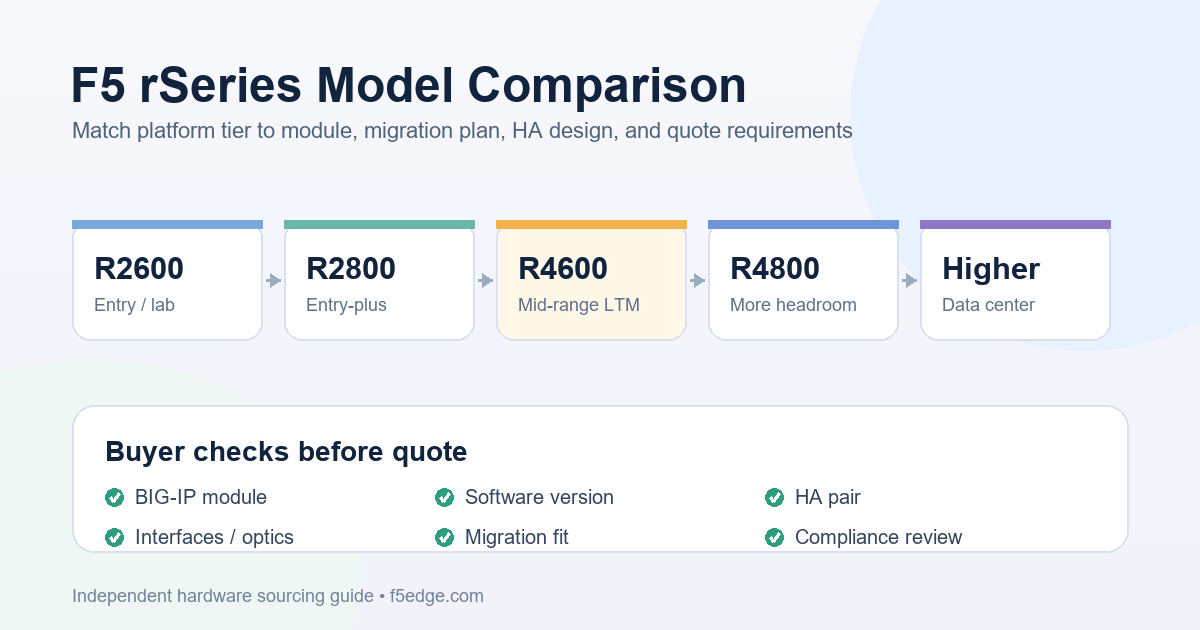
If the team is not sure where to begin, the F5 rSeries model comparison guide can help separate entry, mid-range, and higher-capacity sourcing discussions.
Spare vs Refresh vs Emergency Replacement
Not every EOL replacement project has the same goal.
| Scenario | Goal | Sourcing Priority | Key Risk to Verify |
|---|---|---|---|
| Spare hardware | Reduce short-term outage risk | Compatibility with current model and accessories | Do not assume support, license, or HA compatibility |
| Planned refresh | Replace aging infrastructure | Correct rSeries class and migration planning | Avoid choosing only by old appliance name |
| Emergency replacement | Restore resilience quickly | Fastest compatible option and shipping feasibility | Stock, lead time, and compliance review |
| Lab replacement | Support testing or migration validation | Budget and sufficient feature compatibility | Lab hardware is not automatically production-ready |
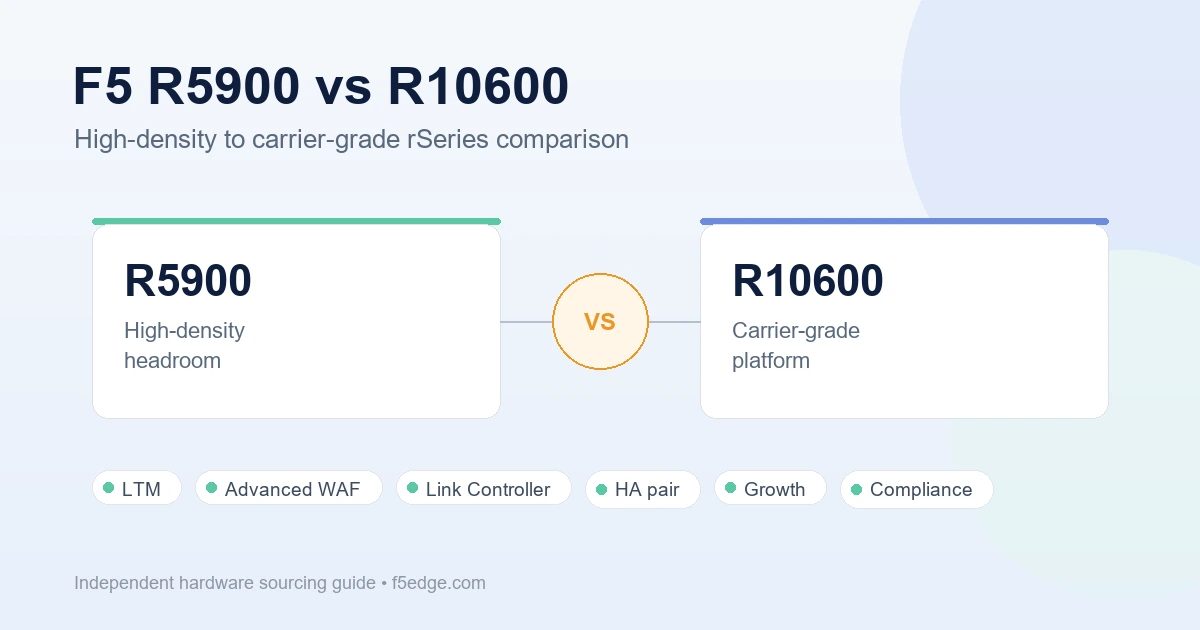
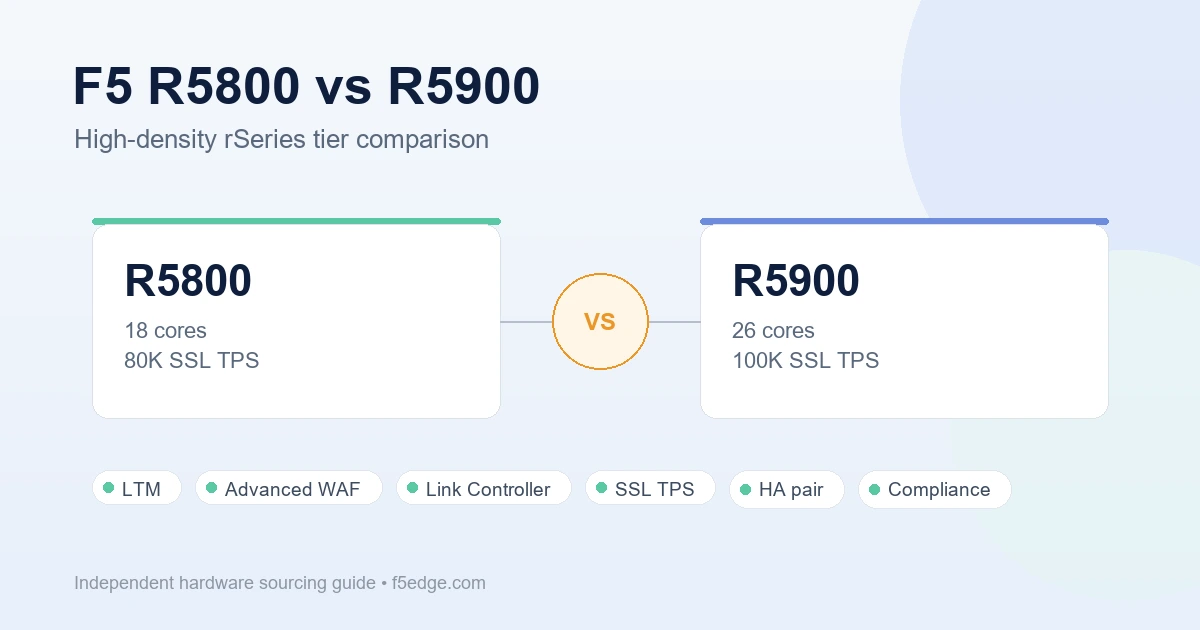
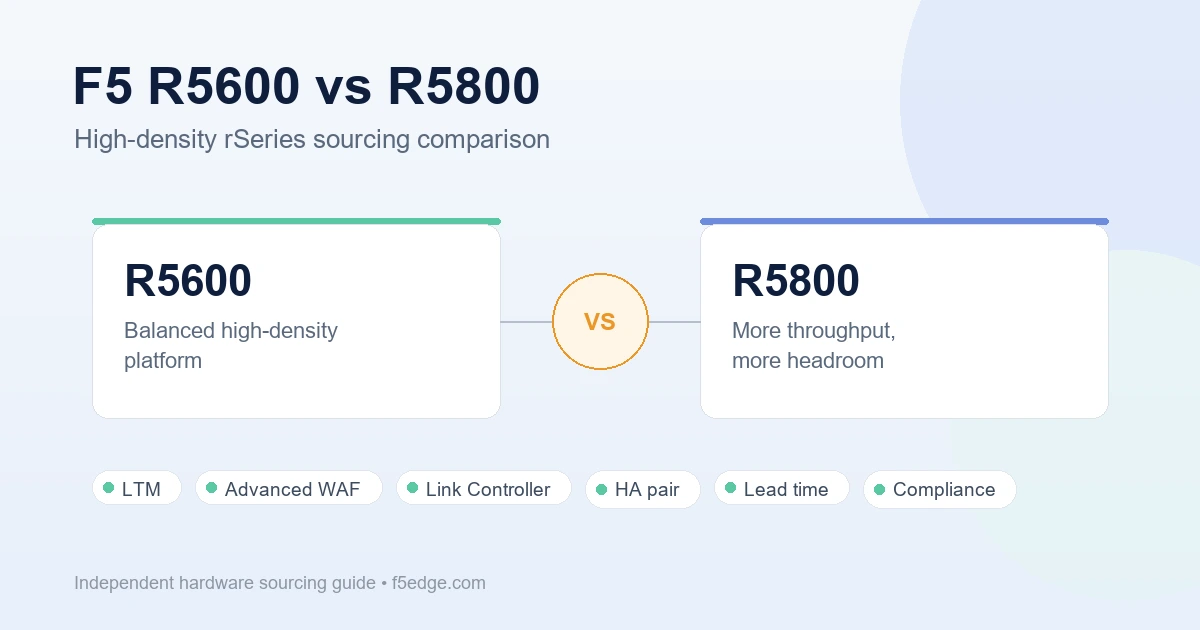
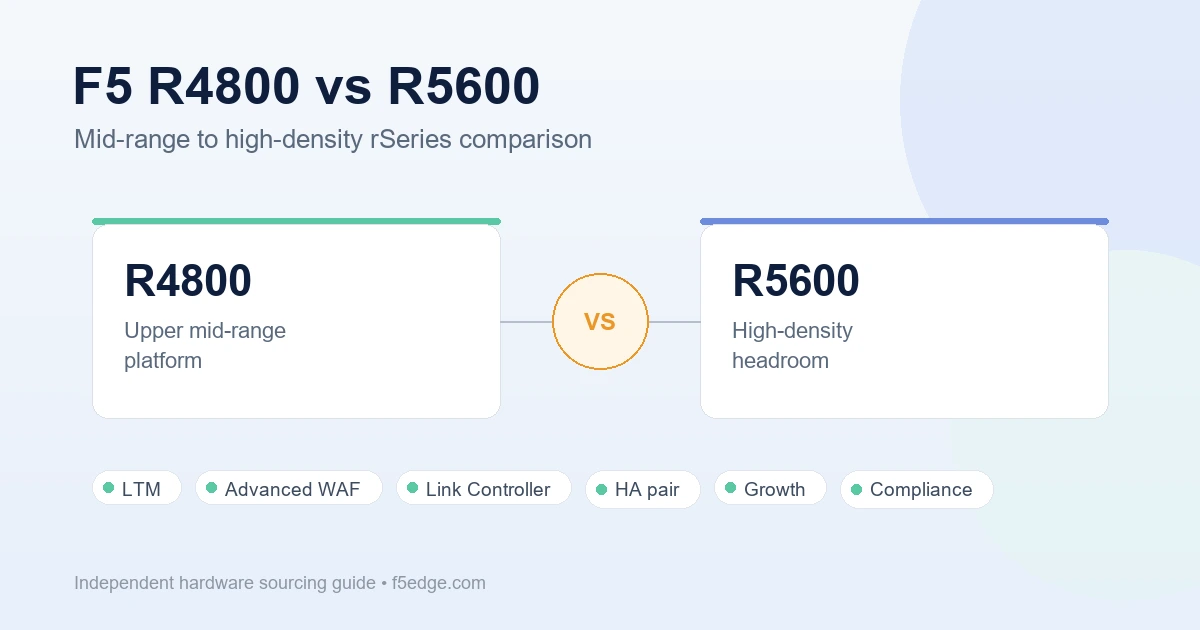
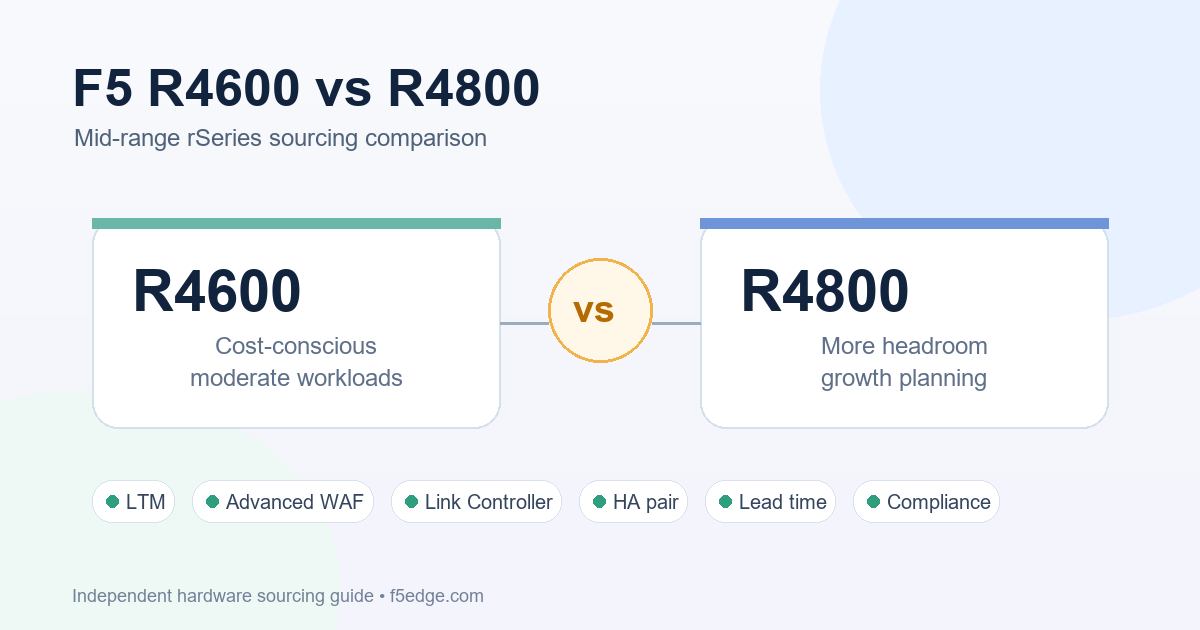
For a planned refresh, compare multiple rSeries classes. A mid-range refresh discussion may include the F5 BIG-IP R4600 LTM appliance, while larger replacement planning may require checking higher-capacity options such as the F5 BIG-IP R10800 LTM appliance.
How to Choose a Target rSeries Class
Choosing a target rSeries class should start with workload requirements, not only with the old appliance model.
Ask the technical team for current traffic levels, peak usage windows, SSL requirements, WAF policy usage, number of applications, interface requirements, HA architecture, software version requirements, and growth forecast.
A smaller rSeries appliance may be suitable for branch, edge, lab, or moderate application delivery use cases. A larger rSeries appliance may be more appropriate for high-traffic, security-heavy, or consolidated environments.
Request a practical shortlist, such as:
- Entry or mid-range rSeries option for budget-sensitive refresh
- Higher-class rSeries option for growth
- Fastest-available option for urgent replacement
- Alternative option if the preferred model is unavailable
This gives procurement and engineering teams room to compare price, timing, and technical fit.
Quote Checklist
A complete F5 BIG-IP EOL replacement quote request should include:
- Company name, delivery city, destination country, and required timeline
- Whether the purchase is for production, lab, spare, or resale use
- Current BIG-IP model, serial number if available, software version, licensed modules, and HA status
- Reason for replacement and required replacement deadline
- Preferred rSeries model or acceptable alternatives
- Required ports, optics, power supplies, rails, power cords, and accessories
- Quantity, preferred condition, warranty expectations, and quote validity requirement
- Export control, end-user, or trade compliance documentation requirements
For a procurement-ready version that can be reused across models, see the F5 BIG-IP hardware quote checklist.
Compliance Note
F5, BIG-IP, rSeries, iSeries, LTM, Advanced WAF, Link Controller, and related product names are trademarks of their respective owners. F5edge.com provides independent hardware sourcing support and does not claim to be an official or authorized F5 reseller. Quote requests are subject to export control and trade compliance review.
F5edge.com does not guarantee stock, pricing, delivery dates, support eligibility, license transfer, software entitlement, or configuration compatibility. Buyers should verify all technical, licensing, support, and compliance requirements before purchase.
FAQ
What should I do first when my F5 BIG-IP appliance reaches EOL?
Document the current model, serial number, software version, modules, HA status, interface usage, and reason for replacement. Then decide whether you need a spare, planned refresh, or emergency replacement.
Can I replace an iSeries BIG-IP appliance with an rSeries appliance?
In many cases, buyers evaluate rSeries hardware when replacing older iSeries appliances, but a one-to-one replacement should not be assumed. Verify software support, modules, licensing path, interfaces, HA design, and workload requirements.
Does replacement hardware automatically transfer my BIG-IP license?
No. License transfer, re-hosting, software entitlement, and support eligibility must be verified through the appropriate licensing or support process.